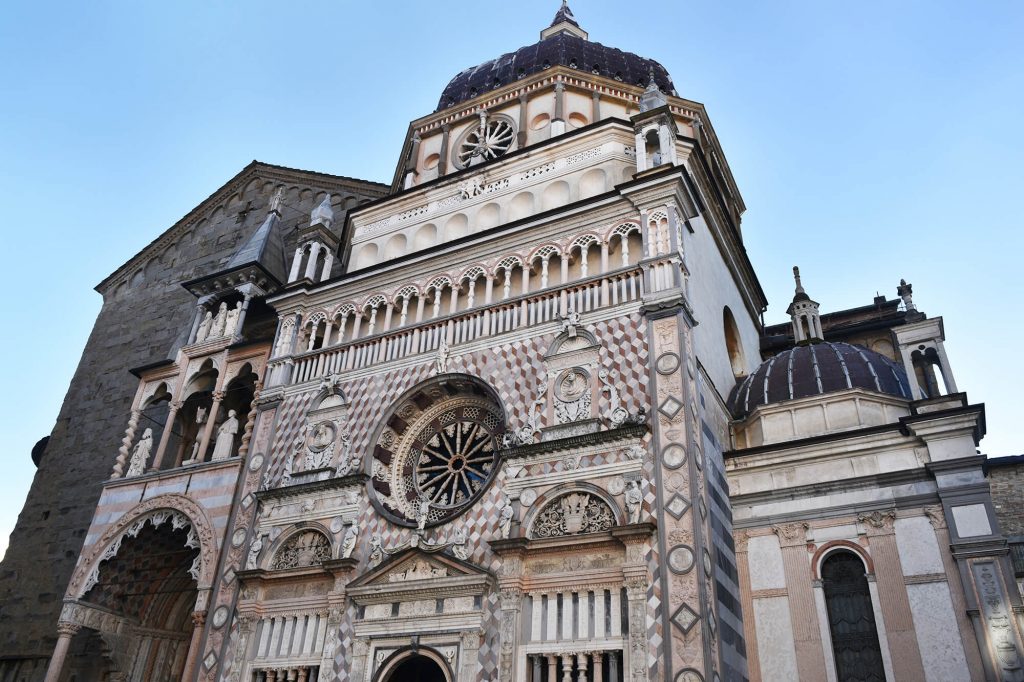
Of all the gelato flavors Italy has given the world, only one was born from a happy accident in a small pastry shop in Bergamo Alta. Stracciatella — that perfect contrast between cool, sweet cream and crisp shards of dark chocolate — was invented here in 1961, and the original recipe is still served in the same historic café where it all began.
This is the story of how one of Italy’s most loved flavors came to be, and of the medieval city that holds far more delicious secrets than most travelers realize.
How Stracciatella Gelato Was Invented in 1961
The setting was Pasticceria La Marianna, a historic pastry shop and café in Colle Aperto, at the gates of Bergamo’s Upper Town. Its owner, pastry chef Enrico Panattoni, was famous for his handmade chocolate Easter eggs — and at this time of year, he had a problem: a basket of eggs that had cracked during shaping and could no longer be sold.
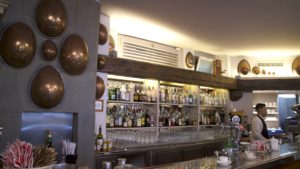
Rather than throw them away, Panattoni melted the chocolate down and poured it, still warm, into a batch of fior di latte gelato that was being churned. The blades of the churner shattered the chocolate on contact; the cold of the gelato froze it instantly into irregular shards. A new flavor was born.
But what to name it? Panattoni turned to the menu of his own restaurant. One of the most popular dishes there was stracciatella alla romana — a soup in which eggs are whisked into hot broth until they break apart into ragged little strands. The visual likeness was perfect. He called his new gelato Stracciatella, and the name has been with us ever since.
More than sixty years later, La Marianna still produces stracciatella using the same machinery Panattoni installed, with the same simple ingredients: cream, milk, egg yolks, sugar, and fine dark chocolate.
Why Bergamo Alta Is Worth the Climb
Bergamo Alta — the Upper Town — is one of the most striking medieval cityscapes in northern Italy, set on a hill above the modern lower city and ringed by sixteenth-century Venetian walls that are today a UNESCO World Heritage Site.
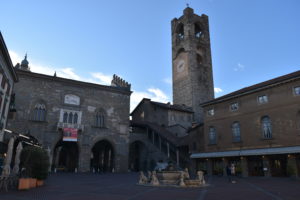
Walking through its narrow streets is to walk through layered history: Roman foundations, Lombard towers, Venetian fortifications, Renaissance chapels. And like all great Italian cities, Bergamo is also home to some wonderfully eccentric historical figures.
The Strange Legacy of Bartolomeo Colleoni
Bartolomeo Colleoni was the commander-in-chief of the Venetian Republic’s land forces in the fifteenth century — and a man so proud of his virility that he added a third “attribute” to his family coat of arms. (Yes, you read that right.)
To secure his memory for the centuries, Colleoni commissioned the chapel that became his mausoleum: today recognized as the masterpiece of Lombard Renaissance architecture and one of the must-see monuments of Bergamo Alta.
But Colleoni was no pure egotist. He also founded the Luogo Pio Colleoni, a charitable institution that still operates in Bergamo today, having received his entire estate by will more than five centuries ago.
The Corsarola: Bergamo’s Culinary Spine
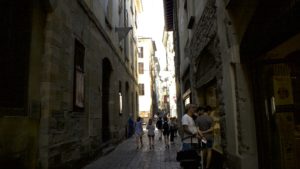
The main street of Bergamo Alta, Via Bartolomeo Colleoni, is known to locals simply as the “Corsarola”. Walking along it and looking into the windows of the food shops, you quickly understand that Bergamo is a city of profound culinary traditions.
Salame Bergamasco: A Salami Unlike Any Other
Salame bergamasco is one of Italy’s most distinctive cured meats: dense yet soft on the palate, with a fragrance of red pepper and garlic and delicate notes of fresh pork. Traditionally, families would slaughter the pig on December 8th — the day of the Immaculate Conception — and the norcino (master butcher) would travel from farmhouse to farmhouse, both performing the work and entertaining the children of the household.
What makes salame bergamasco unique is its use of every part of the pig, including cuts that elsewhere in Italy are reserved for the finest prosciutto, coppa, or culatello. The skilled norcini have long taken advantage of Bergamo’s particular climate: the humidity is essential for proper curing, encouraging the white-grey moulds with green veins that form uniformly on the casing.
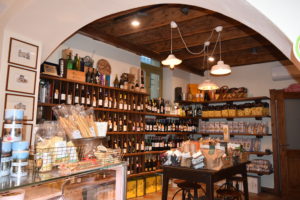
Production is so limited that to find authentic artisanal salame bergamasco, you essentially have to come to Bergamo and buy it in person. To taste it at its best, pair it with a good glass of red wine, or — for an unexpectedly perfect match — the bubbles of a Franciacorta, whose acidity cleanses the palate between bites.
Beyond the Plate: Artisan Workshops Inside the Walls
Bergamo’s surprises continue beyond food. Wandering inside the Venetian walls, you can still find small artisan workshops where craftspeople work in materials handed down through generations. You can buy an unusual, handmade souvenir — or even spend an hour painting one yourself, guided by a local master, and take it home as a memory more meaningful than any postcard.
This is the kind of experience that defines a slow, layered visit to Bergamo: gelato invented by accident, salami cured in the local humidity, a Renaissance chapel built by a man too vain to be modest, and craft traditions that quietly continue inside medieval walls.
Discover Bergamo on a private tour of the Serenissima, art and flavors with a local guide.
Frequently Asked Questions
Where was stracciatella gelato invented?
Stracciatella gelato was invented at Pasticceria La Marianna in Bergamo Alta (the Upper Town of Bergamo, Lombardy, northern Italy) in 1961 by pastry chef Enrico Panattoni. The café still operates today and serves stracciatella made with the original method.
Why is it called “stracciatella”?
The name comes from stracciatella alla romana, a Roman soup in which whisked eggs break apart into ragged strands (“stracciati”) in hot broth. The shape of the shattered chocolate in the gelato reminded Panattoni of the dish, and the name stuck.
What’s the difference between stracciatella gelato and stracciatella cheese?
They share only the name. Stracciatella gelato is fior di latte (cream gelato) with shards of dark chocolate, invented in Bergamo in 1961. Stracciatella di bufala is the soft, stringy cheese that forms the heart of burrata, from Puglia. Both take their name from the verb stracciare — “to tear into strands”.
What is salame bergamasco?
Salame bergamasco is a traditional cured pork salami produced around Bergamo, characterized by the use of every cut of the pig (including noble parts elsewhere reserved for prosciutto), a fragrance of red pepper and garlic, and the distinctive moulds that form thanks to the local humidity. Production is small-scale and largely unavailable outside the area.
When is the best time to visit Bergamo Alta?
Bergamo Alta is rewarding year-round. Spring (April–June) offers mild weather and clear views from the Venetian walls; autumn (September–October) brings the local wine harvest in the surrounding hills and the famous Franciacorta vineyards a short drive away. Avoid August if you want to find the artisan workshops open — many close for summer holidays.
Words by Laura Fumagalli