Walk into a bakery in Frascati, the wine-making town in the hills south of Rome, and you’ll find a cookie unlike anything else in Italian baking. It’s shaped like a woman with three breasts. It’s made from honey, olive oil, and flour. It’s called the pupazza frascatana — and behind its unusual shape lies one of the most charming legends of Castelli Romani folklore.
What Is the Pupazza Frascatana?
The pupazza frascatana is a traditional honey cookie from Frascati, in the Lazio region of central Italy. It is made with just four ingredients — honey, olive oil, orange flavoring, and “00” flour — and shaped by hand into the unmistakable figure of a woman with three breasts. Every bakery in town has its own version: every pupazza is a little different in proportions, sweetness, and finishing touches.
It is, in every sense, a cookie that tells a story. And in Italian baking, that is rare.
Why Three Breasts? The Legend of the Wine-Feeding Nurse
The shape of the pupazza comes from a Frascati folk legend about a wet nurse with a remarkable gift: she could calm even the most agitated, screaming infant. Her secret was a third breast — which, according to the legend, produced not milk but wine.
And not just any wine: Frascati DOC, the white wine for which the hills around the town have been famous since Roman times.
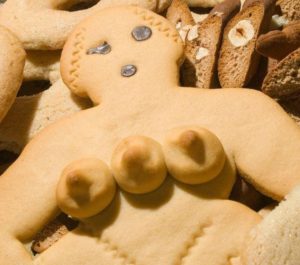
The cookie is, in folkloric terms, a symbol of abundance. It evokes the fertile volcanic soil of the Castelli Romani — land that for over two millennia has produced wine, olive oil, and the crops that have sustained generations of Roman families. The wet nurse of the legend is not just a character; she is the land itself, generous and inexhaustible.
For this reason the pupazza is an indispensable cookie in the bakeries of the Castelli Romani, the cluster of historic towns south of Rome. Every pasticceria and panificio in the area produces it, and each one has its own tradition — its own family recipe, its own reinterpretation of the shape.
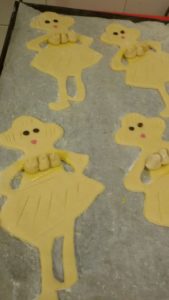 The wooden mold used to shape the pupazza[/caption>
This produces an endlessly varied window display of pupazze, lined up on shelves throughout the medieval streets of Frascati — a familiar sight to travelers strolling the historic center.
Where to Taste the Pupazza Frascatana
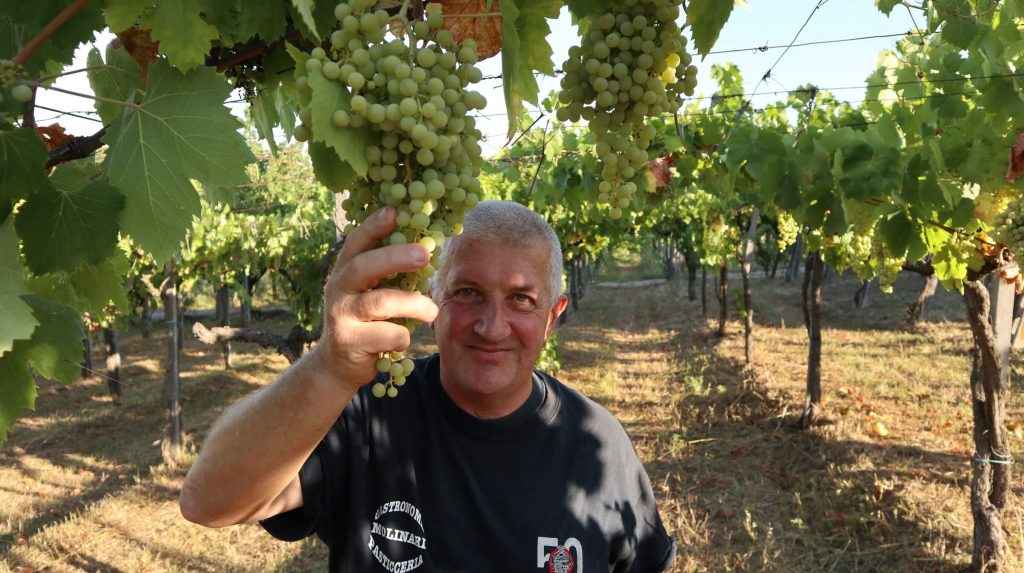
One of the most famous bakeries producing the pupazza is the Antico Forno Molinari, run by the Molinari family for several generations. The Molinari produce not only their own version of the cookie but also their own Frascati DOC wine from family-owned vineyards just outside town.
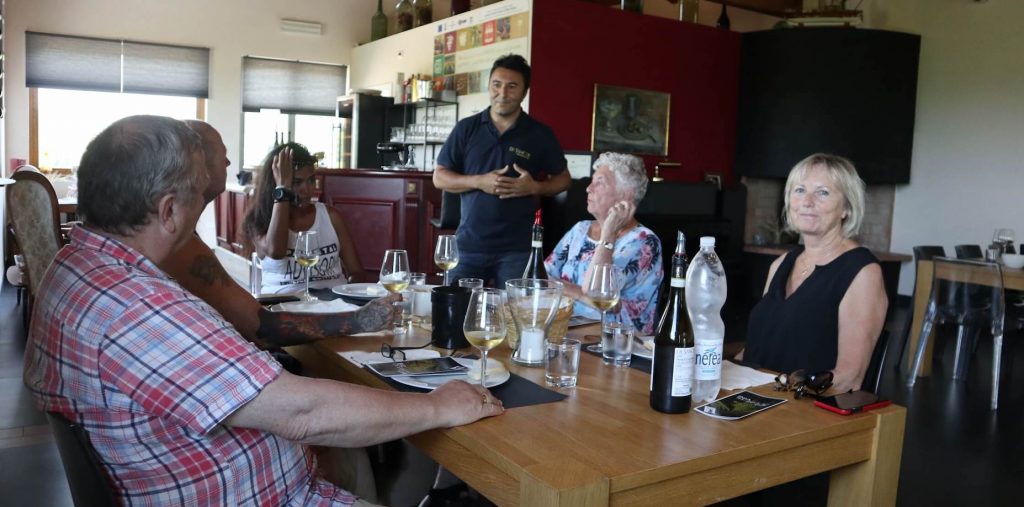
You can taste both — pupazza and wine — directly with Oreste Molinari, one of the brothers running the bakery. Oreste opens his family’s vineyard to small groups and shares stories of the contadini, the wine-making farmers whose work and rituals shaped this corner of Lazio.
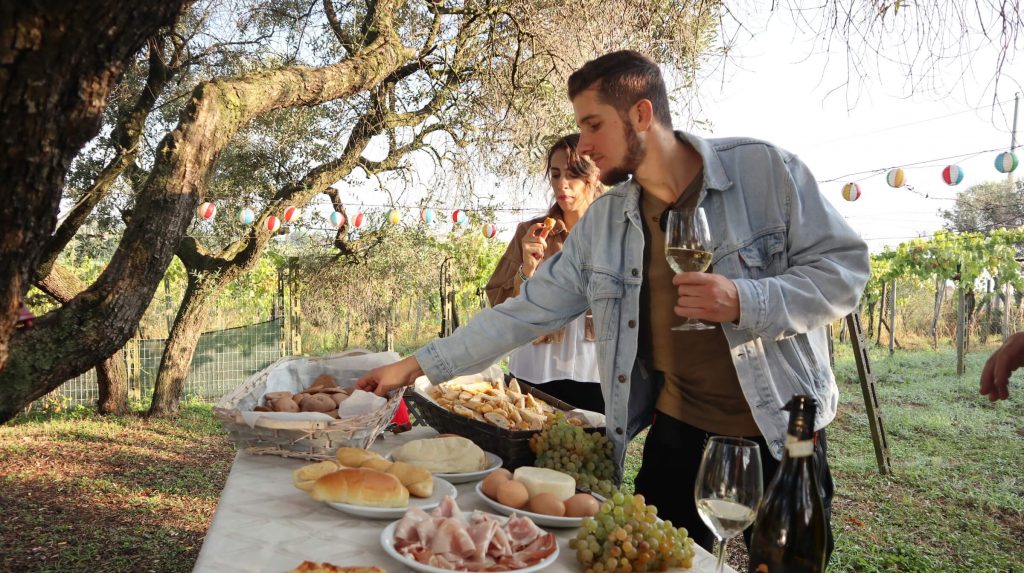
Guests are welcomed into a rustic countryside cottage on the Molinari property for a wine tasting paired with homemade delicacies from the family bakery, including, of course, the pupazza frascatana itself.
If you want to experience the pupazza in its proper context — alongside a glass of Frascati wine in a working family vineyard — our Contadina Breakfast experience is built around exactly this encounter.
How to Pair Pupazza Frascatana with Frascati Wine
The traditional pairing is the obvious one: pupazza frascatana with a glass of Frascati DOC. The wine’s bright acidity and floral notes cut through the honey sweetness of the cookie, and the cookie’s orange-scented density balances the wine’s lightness. It is one of those simple, terroir-driven pairings that needs no improvement.
If you can find a sweeter Frascati Cannellino (the rarer, off-dry version), the match is even better. Some bakers also recommend pairing the pupazza with the famous ciambelline al vino — wine-dough cookies — for an entirely Lazio sweet plate.
Pupazza Frascatana: Traditional Recipe
The pupazza is one of the few traditional Italian cookies that contains no butter, no eggs, and no refined sugar. Just honey, oil, flour, and orange. The recipe is straightforward enough to attempt at home — though shaping the three-breasted figure takes practice.
Ingredients
- 500 g acacia honey
- 250 ml extra virgin olive oil
- ½ teaspoon orange flavoring (or fresh orange zest, more traditional)
- “00” flour, added gradually until the dough reaches the right consistency
Method
Warm the honey gently to fluidify it, then mix with the olive oil and orange. Gradually add “00” flour, stirring continuously, until the dough holds together without being sticky. Roll out to about 1 cm thickness, then shape by hand into the traditional three-breasted figure — or use a wooden pupazza mold, if you can find one.
Bake at 180°C (350°F) for approximately 20–25 minutes, until the cookies are golden and firm. Allow to cool completely before serving — pupazze are designed to keep well, and many bakers say they improve after a day’s rest.
For a visual guide, the Terre Ospitali association produced a tutorial in collaboration with Pasticceria Purificato, one of the historic bakeries of the area:
Beyond the Pupazza: What to Do in Frascati
Frascati sits 21 km southeast of Rome, easily reachable by regional train (about 30 minutes from Termini station) or by car along the Via Tuscolana. The town is one of the principal centers of the Castelli Romani — a cluster of small towns built across the volcanic Alban Hills, each with its own wine tradition and historic center.
Beyond tasting the pupazza, visitors come to Frascati for the Renaissance villas (above all Villa Aldobrandini, with its dramatic baroque cascade), the cantine — the underground wine cellars carved into volcanic tuff stone where Frascati DOC has been aged for centuries — and the panoramic terraces looking back toward Rome on a clear day.
For travelers who want to slow down and dig deeper into the food traditions of the area, our Contadina Breakfast in a Frascati vineyard is the gentlest introduction to this corner of Lazio — and includes the pupazza, the wine, and the stories that connect them.
Frequently Asked Questions
What is the pupazza frascatana?
The pupazza frascatana is a traditional honey cookie from Frascati, in the Castelli Romani area south of Rome. It is shaped like a woman with three breasts and made from honey, olive oil, orange, and “00” flour. It is one of the most recognizable traditional cookies of the Lazio region.
Why does the pupazza frascatana have three breasts?
The shape derives from a local Frascati legend about a wet nurse with a remarkable third breast that produced not milk but Frascati DOC wine. The figure became a symbol of abundance, evoking the fertile volcanic land of the Castelli Romani.
What does pupazza frascatana taste like?
The pupazza is moderately sweet, with a dense, slightly chewy texture from the honey-and-flour base. The dominant flavors are acacia honey, citrus (typically orange), and olive oil. It is significantly less sweet than most modern cookies and pairs naturally with wine rather than coffee.
Where can I taste an authentic pupazza frascatana?
The best place is in Frascati itself, at any of the historic bakeries along the town’s medieval streets. The Antico Forno Molinari is one of the most celebrated; the Pasticceria Purificato is another. For a deeper experience, visit a Frascati vineyard that pairs the pupazza with their own DOC wine.
How do you pair pupazza frascatana with wine?
The traditional pairing is with Frascati DOC white wine, the local appellation. The wine’s acidity and floral notes balance the cookie’s honey sweetness perfectly. A Frascati Cannellino (the off-dry version) is even better suited if you can find it.
Is the pupazza frascatana vegan or vegetarian?
The pupazza frascatana is vegetarian, made with honey, olive oil, flour, and orange. It contains no butter, no eggs, and no dairy. It is not strictly vegan because it contains honey, but it is often suitable for travelers with dairy or egg sensitivities.